Tipping in Croatia: How Much to Leave and How to Pay in Restaurants
Tipping in Croatia is not compulsory: round up the bill or leave around 10% for good service. Card tips since 2024, where you still need cash, what a couvert is, how to read the bill and when to book a table.
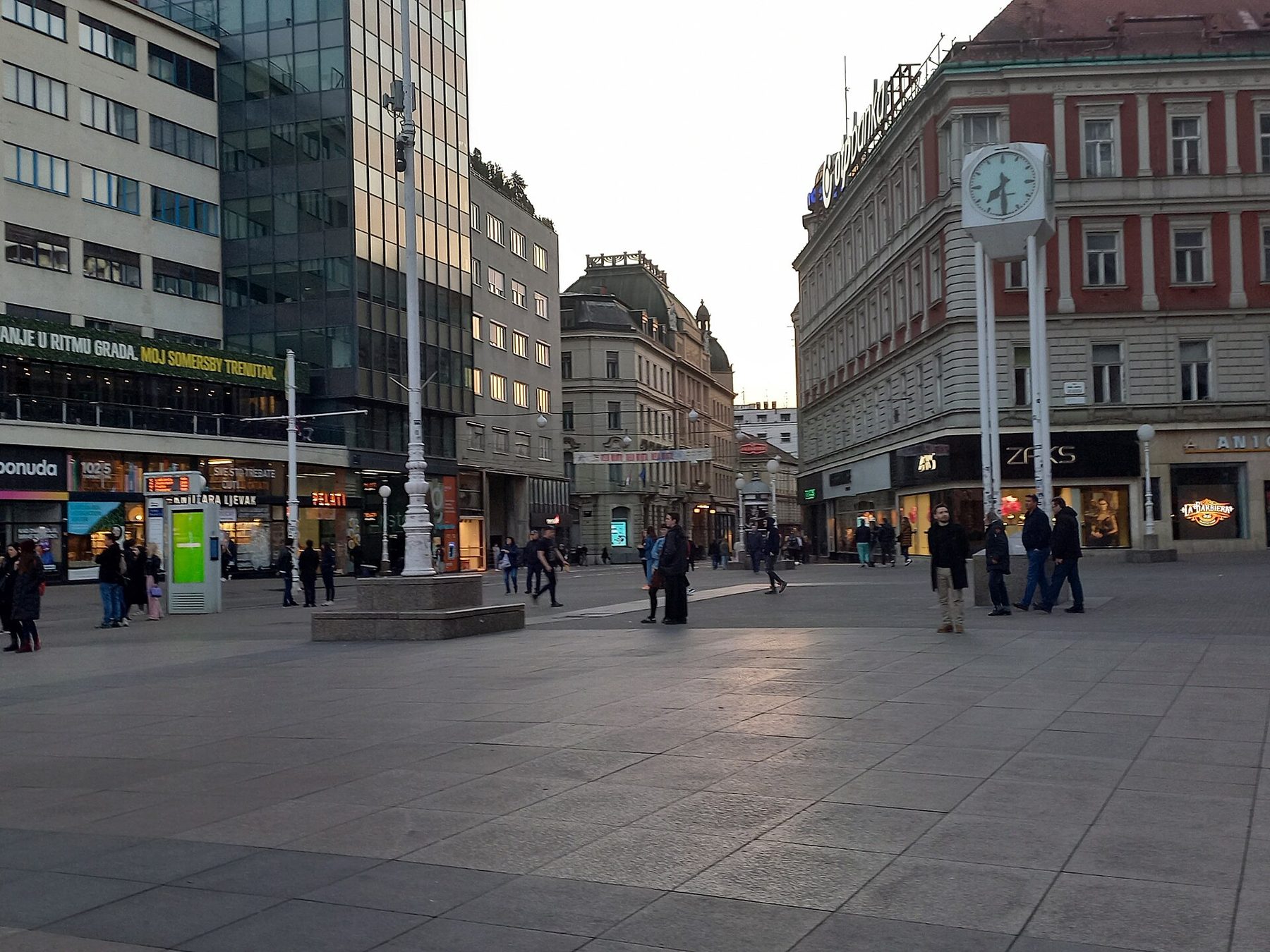
Tipping in Croatia is not compulsory and no service charge is added to your bill by default. For good service in a restaurant it is customary to round up or leave about 10%; in a café you simply round up. Since 2024 tips can be given by card as well as in cash, everything is paid in euros, and you are entitled to a printed receipt for every order.
Do you tip in Croatia restaurants, and how much?
There is no rule, only custom. Travel guides and portals written by foreigners living in Croatia agree on the same range: around 10% for good service in a restaurant with table service, rounding up or about 5% in a pizzeria or konoba (a traditional tavern), and up to 15% for an exceptional dinner in a better restaurant. Nobody will look at you strangely if you leave less. A tip is a reward for service, never an expected surcharge.
An example: a bill of €46.40 rounded up to €50 is perfectly polite. On a €120 bill with attentive service, €10 to €12 is the usual measure. With large groups, check whether a service line has already been added; it is rare, but then no extra tip is needed.
Cafés, bars, taxis and guides
- Coffee and drinks: round up. Paying €2 for a €1.80 coffee is the usual small courtesy. Nobody calculates a percentage.
- At the bar: the same as in a café. Leave the small change on the counter or say u redu je (keep the change).
- Taxis: round up to the nearest euro or add €1–2. Drivers do not expect it.
- Tour guides: €5–10 per person at the end of a group tour, more for a private guide depending on the length of the day.
Tipping by card: how it has worked since 2024
Until 2024 a tip in Croatia was a cash affair. Changes to the tax rules now let a restaurant record a tip in the national fiscal receipt system alongside the receipt already issued, whether the tip was given in cash or by card. The Croatian Tax Administration states that a tip recorded this way is tax-free for the staff member up to €3,600 a year (as published by the Tax Administration, September 2026); anything above that is taxed. The important detail for a guest: the tip does not appear as a line on the receipt. The waiter enters it separately in the till, and the card terminal then charges the total including the tip.
In practice it goes like this. When you ask for the bill, say the amount you want to pay before the card touches the terminal, for example "make it fifty". The terminal will not offer you a percentage. Not every restaurant supports this, because for the owner it is optional. In small taverns and cafés cash remains the surest way for the tip to reach the person who served you.
Cards, cash and ATMs in Croatia
Croatia has used the euro since 1 January 2023, at a fixed rate of 7.53450 kuna to the euro. Visa and Mastercard are accepted in almost every restaurant in the towns, in hotels and supermarkets, and contactless payment by phone works wherever a card does. American Express and Diners are accepted by fewer places, so carry a second card alongside them.
The sign samo gotovina (cash only) is still seen in smaller taverns, at market stalls, on beaches and on the islands. A practical rule: for a day trip to an island or the hinterland carry enough cash for the whole day; in the towns a card works almost everywhere.
ATMs and fees
- Withdraw cash at bank ATMs, ideally next to a branch, rather than at free-standing machines by the beach or in shop doorways. Independent operators such as Euronet charge higher fees and a worse exchange rate, something consumer organisations in several EU countries have warned about.
- When an ATM or card terminal offers to charge you "in your own currency" (dynamic currency conversion), decline and choose euros. Your own bank will convert at a better rate.
- Your bank may charge a fee per withdrawal, so take out a larger amount once rather than several small ones. In the EU an ATM must show you the exchange rate and its deviation from the European Central Bank rate before you confirm.
The receipt, the couvert and what may be charged
Every restaurant and café in Croatia is legally required to issue a fiscal receipt, and the guest should take it and keep it until leaving the premises. The receipt shows the venue's name, tax number, date, itemised prices, VAT and a unique receipt identifier. If someone brings you only a handwritten total or a "pro forma" slip, ask for the real receipt. It is your protection if something is wrong.
The couvert (kuver) is a per-person charge for bread, cutlery and service that some restaurants, especially in Istria and Dalmatia, add to the bill. It must be listed on the menu or price list before you order. If there is no couvert on the price list, it may not be charged. Bread you did not order can simply be sent back. Tap water in Croatia is safe to drink, but a restaurant will almost always offer bottled water; if you want tap water, ask for obična voda iz slavine, molim.
Look at the bill before paying. Fish on a menu is usually priced per kilogram, so check that the weight charged is the one the waiter told you before cooking. Check too that the couvert has been charged once per person, not per table and per person. What a meal costs in a tavern, a pizzeria and a better restaurant is covered in our guide to restaurant prices in Croatia.
Bookings, kitchen hours and house rules
In July and August restaurants in Dubrovnik, Split, Rovinj and on the islands fill up for dinner by mid-afternoon. Book a day ahead, and several days for sought-after restaurants with top kitchens. Booking is free, and many restaurants on jelo.hr take online reservations so you do not have to call. Out of season and in smaller places you rarely need a booking, except for a larger group or Sunday lunch.
- Kitchen hours: in season lunch is usually served from noon, dinner from 6 or 7 pm, and most kitchens stop taking orders around 10 to 11 pm. In winter everything is earlier.
- Dress code: relaxed. Anything goes in a tavern; at a beach restaurant you do not sit down in swimwear without a shirt. Only a handful of fine-dining restaurants ask for smarter dress, and they say so when you book.
- Children: welcome almost everywhere, high chairs are common, a separate children's menu less so. Ask for a half portion; most taverns will do it without fuss.
- Dogs: generally allowed on terraces; indoors it depends on the owner. Ask before you sit down.
- Smoking: banned inside restaurants and cafés under the Croatian tobacco law, allowed on open terraces. That is why terraces in season are often smoky and the non-smoking tables are indoors.
Short Croatian phrases for ordering
Waiters in tourist towns speak English, often German or Italian too. A few words of Croatian still open doors, and the staff appreciate it.
- Dobar dan / Dobra večer — good day / good evening, said on entering, before anything else
- Stol za dvoje, molim — a table for two, please (za četvero for four)
- Jelovnik, molim — the menu, please; Što preporučujete? — what do you recommend?
- Ja ću… — I'll have…
- Račun, molim — the bill, please; the most important line in this article
- U redu je — keep the change, said as you hand over the cash
- Karticom / gotovinom — by card / in cash
- Hvala, bilo je odlično — thank you, it was excellent; a rakija on the house often follows
- Živjeli! — cheers!
Where to eat: our city guides
Once you know how much to tip and how to pay, all that remains is choosing the restaurant. Our city guides: the best restaurants in Split, the top restaurants in Dubrovnik, restaurants in Zagreb, restaurants in Rovinj, restaurants in Zadar and restaurants in Pula. For the islands see the restaurants on Korčula and restaurants on Rab, and our guide to Croatian dishes explains what to order in the first place. The full list is among all our guides, and restaurants that take online bookings are in the restaurant directory for Split and other towns.
Frequently asked questions
Is tipping compulsory in Croatia?
No. A tip is never added to the bill automatically and nobody may demand one. The custom is to round up or, for good service in a restaurant, to leave about 10%. If the service was poor, leaving nothing is entirely acceptable.
How much do you tip in a café in Croatia?
In a café nobody works out a percentage; you round up. A €1.80 coffee is paid with €2, a €4.50 drink with €5. If you have stayed a long time or the waiter was especially kind, add a euro. At the bar the small change simply stays on the counter.
Can I tip by card in Croatia?
Yes. Since 2024 a restaurant can record a tip alongside the fiscal receipt regardless of how you pay. Tell the waiter the total you want to pay before you tap the card. The tip does not appear as a line on the receipt. Not every restaurant offers this, so cash remains the safest option.
Do restaurants in Croatia accept American Express?
Less often than Visa and Mastercard. Larger restaurants and hotels in the towns usually take Amex; smaller taverns, cafés and places on the islands often do not. Always carry a second card or some cash, and ask before ordering if it matters to you.
What is a couvert and do I have to pay it?
A couvert is a per-person charge for bread, cutlery and service that some restaurants add. It may only be charged if it is listed on the menu or price list before you order. If it is not on the price list, you do not pay it. Bread you did not order can be sent back.
Tipping in Croatia is a gesture, not an obligation: round up or leave around ten percent when you are happy. Take the receipt, pay by card in town, bring cash to the islands, and book your table a day ahead in season. Dobar tek, enjoy your meal.