Where a restaurant without online reservations loses guests: four situations from practice
A guest looking for a Saturday table at 10:30 pm, a phone ringing mid-service, a table promised twice and a regular nobody remembers. Four points where a restaurant without online reservations loses guests, with prices and a weekend test.
A restaurant does not lose guests because it lacks a "digital presence". It loses them at very specific moments: when someone looks for a Saturday table at 10:30 pm, when the phone rings while a waiter is carrying four plates, when the same table is promised twice, and when a guest on their fifth visit is greeted like a stranger. This article walks through those four moments and, for each, names what actually closes the gap.
1. The guest wants a table while you are closed
The decision to eat out is rarely made at 1 pm. It is made in the evening, phone in hand, often for the following weekend. If the restaurant is open until 11 pm and only takes bookings by phone, all a guest can do at that point is note the number and call tomorrow. Some people do. Others open the next restaurant in the search results, the one with a form that works at midnight.
An online reservation form accepts requests 24 hours a day: the guest picks a date, time and party size, the system checks free tables and sends an email confirmation, and the restaurant is notified. If the requested slot is taken, the guest immediately sees up to three alternative times instead of waiting for a reply.
A simple test: open the call log on the restaurant phone and look at the hours people call. Calls at 10 pm, 11 pm and 8 am are usually bookings that happened only because the guest was persistent.
2. The phone rings in the middle of service
Saturday, 8:15 pm, the room is full. The phone rings, a waiter answers on the move and writes "Mark, 4 people, tomorrow at 8" on the first piece of paper he finds. The next day nobody knows whether that meant 8 pm or 8 am, which Mark, or whether the table was ever written down. The same call in the same situation can also go unanswered, and an unanswered call during the rush almost never comes back.
A second test, on Sunday morning: count the missed calls from Friday to Saturday night. Each one was a possible booking. The number usually surprises people, and it is the only number you need, because it is yours.
A system does not remove the phone. Bookings that arrive by call are entered manually by staff into the same calendar that holds the online ones, so there is one list instead of three. But a large share of rush-hour calls simply disappears, because a guest who has seen on the website that they can book without waiting does exactly that.
3. A table promised twice
A double booking does not cost one table. It costs a party of six standing at the door, a waiter improvising in front of the other guests and a review written that same evening. It happens when two people write in the same notebook, when a booking never gets copied from a scrap of paper, or when nobody accounted for how long a table stays occupied.
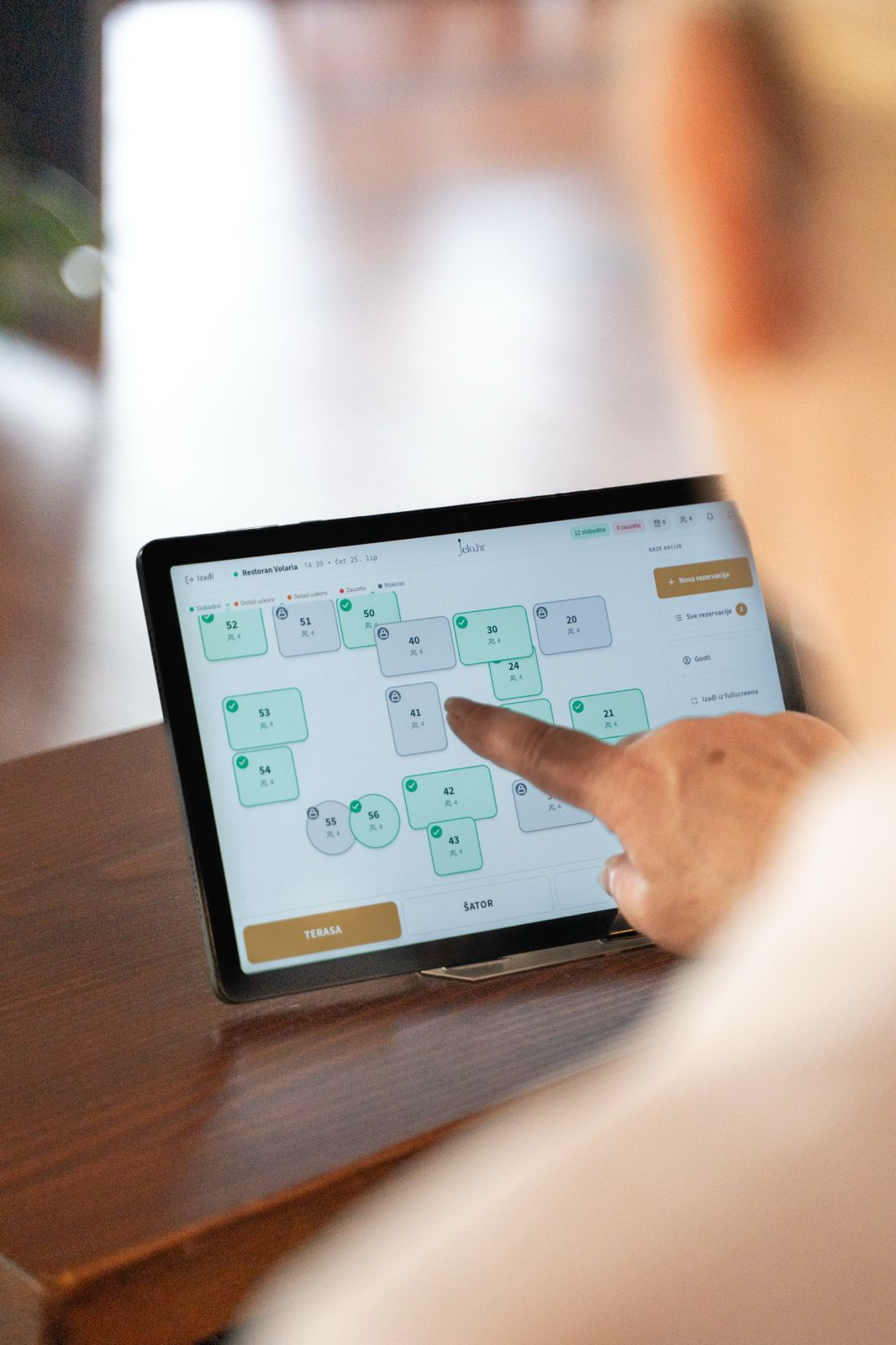
This is where a table layout helps, not as a drawing but as the place where the arithmetic happens. Each table has a minimum and maximum party size, each booking has a defined duration and a turnaround time between seatings, and the system checks for space before confirming. It does not accept more than the restaurant can seat. Tables for private events, or the terrace on a rainy day, can be blocked by date and time.
4. The returning guest nobody remembers
What remains of a phone call is a name and a mobile number on a piece of paper thrown away the next day. A guest who has been five times, who always asks for the window table, or who has twice not shown up, is brand new to the notebook every single time. That information is worth money and disappears with every new page.
With a regular guests overview, every booking creates or updates the guest's profile on its own: number of visits, notes, basic preferences. The new shift sees what the previous one saw, and staff do not have to type anything extra. Automatic notifications build on that: a confirmation straight away, a reminder the day before, both without a single message sent from the floor.
What it costs and what it pays back
Reservation system prices in 2026 are not an argument against. According to the price list on dish.co for Croatia (September 2026), DISH Professional Reservation costs €25 per month excluding VAT plus a one-time setup fee of €50. Eat App, according to the price list on restaurant.eatapp.co (September 2026), charges $99 per month for its Lite plan, or $69 per month with annual billing. Jelo.hr plans start at €29 per month for Start and €59 for Pro, with a one-time activation of €99 and no commission per guest or booking.
The revenue side is short: if an average booking brings in €50, two extra bookings a month cover the Pro plan. One booking that arrived at 11 pm instead of going to a competitor is already half of that.
What it looks like in practice
Restaurant Volaria in Veruda marina in Pula has around 130 seats and, in season, serves guests from the boats, the marina and the town. Bookings arrive online, staff see them on a tablet together with the table layout, and guests receive automatic confirmations and reminders. The scraps of paper on the bar have been replaced by one overview that everyone on shift can see.
- New venues get all Pro features free for 7 days, no card required.
- Onboarding takes up to 24 hours; a phone, tablet or computer is all you need.
- The subscription runs for a minimum of 6 months, with no hidden costs.
If you want to know how many bookings you would receive outside opening hours, the fastest way is to let the form run for two weeks alongside the notebook and compare. See the plans or send an enquiry and we will show you how the system would look with your tables.